










By: Andrew Carlson
In a dramatic escalation that underscores the fragility of diplomacy in one of the world’s most strategically vital waterways, President Donald Trump announced that the United States military had attacked and seized an Iranian-flagged cargo vessel attempting to evade a naval blockade—an action that threatens to further destabilize an already volatile confrontation between Washington and Tehran. As detailed in a report on Sunday in The New York Times, the incident unfolded amid a cascade of mutual accusations of ceasefire violations, signaling a rapid deterioration of what had been a tenuous pause in hostilities.
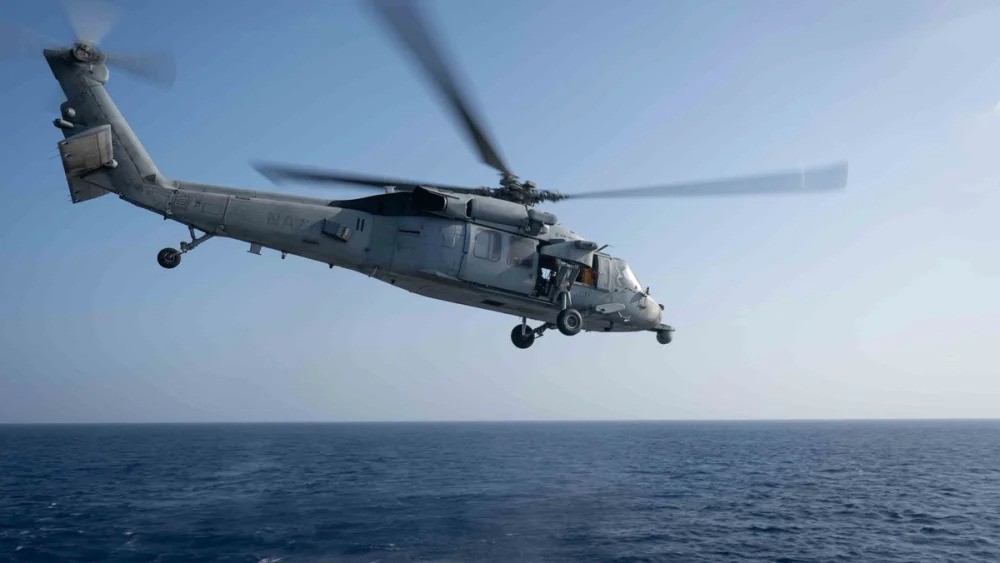
According to the President’s account, a United States Navy guided missile destroyer intercepted the vessel—identified as the Touska—in the Gulf of Oman after it allegedly attempted to circumvent restrictions imposed under the American blockade of Iranian ports. The vessel, flying Iran’s flag and reportedly under sanctions, was ordered to halt. When its crew refused to comply, American forces took decisive action. In a strikingly forceful description shared via social media, Trump stated that the destroyer “stopped them right in their tracks by blowing a hole in the engineroom,” effectively disabling the ship before United States Marines boarded and assumed control.
The seizure, which Iran had not immediately confirmed at the time of the initial reports cited by The New York Times, represents a significant escalation in maritime enforcement operations and introduces a new dimension of direct confrontation between the two adversaries. It also casts a long shadow over the already strained ceasefire framework, raising questions about whether the fragile truce can endure amid such aggressive actions.
The broader context of the incident is one of deepening mistrust and competing narratives. Earlier on the same day, President Trump accused Iran of firing upon commercial vessels traversing the Strait of Hormuz, describing such actions as a “total violation” of the ceasefire agreement. Iranian officials swiftly countered with their own allegations. Esmaeil Baqaei, a spokesman for Iran’s foreign ministry, denounced the United States blockade itself as the true breach, characterizing it as both unlawful and morally indefensible.
Baqaei’s language was notably severe, asserting that the blockade constituted a war crime and even a crime against humanity by imposing collective punishment on the Iranian population. These accusations, as reported by The New York Times, reflect the degree to which the dispute has transcended tactical disagreements and entered the realm of fundamental legal and ethical contestation.
The situation in the Strait of Hormuz has become a focal point for these tensions. This narrow maritime corridor, which connects the Persian Gulf to the open ocean, is a critical artery for global energy supplies. Any disruption to its flow reverberates far beyond the immediate region, affecting international markets and geopolitical stability. In recent days, a series of incidents involving commercial shipping has underscored the precariousness of the situation.
Reports compiled by The New York Times indicate that multiple vessels have encountered hostile actions while attempting to navigate the strait. The United Kingdom Maritime Trade Operations organization documented two separate incidents in which ships were targeted. In one case, gunboats affiliated with Iran’s Islamic Revolutionary Guard Corps allegedly opened fire on a tanker without prior radio warning. In another, a container ship was struck by what was described as an unknown projectile, causing damage to cargo containers.
The national affiliations of the affected vessels have added further complexity to the unfolding crisis. While President Trump asserted that the ships under attack were French and British, subsequent clarifications suggested that at least some of the vessels were registered under different flags, including India. The Indian government responded by summoning Iran’s ambassador, signaling the potential for the dispute to draw in additional international actors and to broaden beyond a bilateral confrontation.
Shipping analysts have noted that several vessels altered their courses in response to the perceived threat, a development that underscores the immediate impact of the escalating tensions on maritime activity. Even as reports of further incidents remained limited, the atmosphere of uncertainty has been sufficient to disrupt normal patterns of navigation, illustrating how quickly confidence in the security of the strait can erode.
The Iranian response has not been confined to rhetoric alone. According to accounts referenced by The New York Times, Iranian authorities have taken steps to assert tighter control over the strait, reportedly compelling certain vessels to change course. Such actions suggest an effort to reinforce Tehran’s influence over the waterway and to signal its willingness to challenge American enforcement measures directly.
These developments stand in stark contrast to earlier indications that a degree of normalization might be within reach. Just days prior, President Trump had suggested that the strait was “fully open and ready for full passage,” a statement that appeared to signal confidence in the stability of the ceasefire. Yet subsequent clarifications from Iranian officials painted a more conditional picture. Iran’s foreign minister, Abbas Araghchi, indicated that passage would be permitted only along specific routes and for a limited duration tied to the lifespan of the ceasefire.
The ambiguity surrounding these statements has contributed to the current confusion. It remains unclear whether references to the ceasefire pertain to the United States and Iran directly or to parallel arrangements involving other regional actors, such as the ceasefire between Israel and Lebanon. This lack of clarity has complicated efforts to establish a shared understanding of the rules governing maritime activity during the truce.
As tensions have mounted, so too have the stakes of the diplomatic process. The possibility of renewed negotiations had offered a glimmer of hope for extending the ceasefire and addressing the underlying issues that have fueled the conflict. However, the latest developments have cast doubt on the viability of this path. Iranian officials, as cited by The New York Times, have indicated that no further talks will take place unless the United States lifts its blockade—a condition that Washington has thus far shown no inclination to meet.
For his part, President Trump has adopted an increasingly assertive tone, coupling references to potential negotiations with stark warnings of military escalation. He has suggested that the United States could target critical infrastructure within Iran if a deal is not reached, a threat that underscores the high-risk environment in which diplomacy is currently unfolding. Such statements, while intended to exert pressure, may also serve to harden Iranian resistance and further complicate efforts to de-escalate the situation.
The interception of the Touska thus emerges as a defining moment in this unfolding crisis. It encapsulates the convergence of military action and diplomatic breakdown, illustrating how quickly efforts at negotiation can be overtaken by events on the ground—or, in this case, at sea. The incident also highlights the inherent tension between enforcement and engagement, raising questions about whether the two can be effectively pursued in tandem.
For the international community, the implications are profound. The Strait of Hormuz is not merely a regional concern; it is a global chokepoint whose stability is essential to the functioning of the world economy. Any sustained disruption could have cascading effects, influencing energy prices, trade flows, and geopolitical alignments. As such, the current standoff is being closely monitored by governments and institutions far beyond the immediate participants.
In the absence of a clear resolution, the situation remains perilously fluid. Each new development—whether a military action, a diplomatic statement, or an incident involving commercial shipping—has the potential to shift the balance and to either exacerbate or alleviate tensions. The margin for error is exceedingly narrow, and the consequences of miscalculation could be severe.
Ultimately, the events of the past days serve as a stark reminder of the challenges inherent in managing complex international disputes. The interplay of competing interests, divergent narratives, and strategic imperatives creates an environment in which progress is difficult to achieve and easily undone. As The New York Times reported, the coming days will be critical in determining whether the current trajectory leads toward renewed conflict or a tentative return to dialogue.
For now, the image of a seized vessel in the Gulf of Oman stands as a potent symbol of a broader struggle—one in which the boundaries between war and peace are increasingly blurred, and in which the outcome remains uncertain.