














By: Ariella Haviv
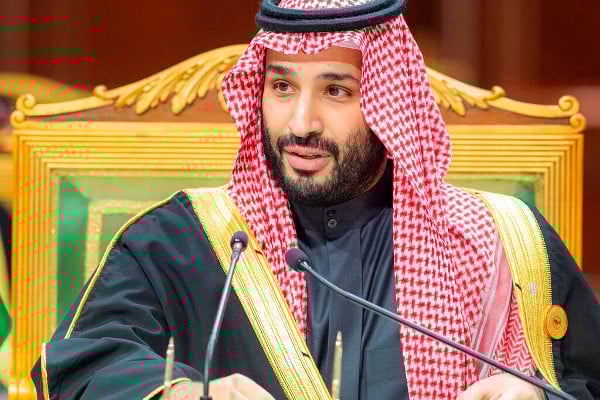
In a moment of high-stakes diplomacy that may well redefine the geopolitical architecture of the Middle East, an urgent and reportedly impassioned telephone call from Saudi Crown Prince Mohammed bin Salman fundamentally altered the trajectory of United States policy toward Iran. What had been expected to culminate in a sweeping and definitive ceasefire instead resulted in a far more measured and conditional pause in hostilities—an outcome that, according to White House sources, was the direct consequence of last-minute intervention from Riyadh.
The episode, described by senior officials as both dramatic and consequential, underscores the increasingly intricate interplay between military strategy, economic leverage, and regional alliances in shaping the future of the Middle East. At its core lies a striking proposition: a comprehensive Saudi offer combining vast financial commitments, sweeping geopolitical realignments, and a shared vision for the post-conflict order.
Prior to the pivotal exchange, President Donald Trump had reportedly been prepared to announce a full cessation of hostilities with Iran. The anticipated agreement hinged on a critical concession from Tehran—the immediate reopening of the Strait of Hormuz, a vital artery of global energy commerce whose closure had sent shockwaves through international markets.
Such a declaration would have marked a decisive de-escalation, signaling a potential end to a period of heightened confrontation. Yet, as White House sources consistently emphasize, the calculus shifted abruptly following a direct appeal from Mohammed bin Salman.
According to those familiar with the conversation, the Saudi leader implored the American president to reconsider, characterizing the moment as a rare and historic opportunity to decisively weaken the Iranian regime. “This is a historic opportunity – we must finish the job,” he reportedly urged, framing continued pressure not merely as an option, but as a strategic imperative.
What followed was not simply a plea, but a meticulously constructed proposal—an expansive package of economic and strategic incentives designed to align American and Saudi interests in a prolonged campaign against Iran. White House sources describe the offer as unparalleled in both scale and ambition, encompassing a series of commitments that, taken together, amount to a transformative blueprint for the region.
Foremost among these was a direct financial pledge of extraordinary magnitude: a transfer of $100 billion explicitly earmarked to offset the costs of American military operations. This commitment, according to White House sources, was intended to alleviate domestic fiscal concerns while reinforcing the sustainability of continued engagement.
Complementing this immediate infusion was a broader economic initiative of staggering proportions. Saudi Arabia proposed to invest approximately $1 trillion in the United States economy, alongside the purchase of $500 billion in American military hardware. Such measures, White House sources note, would not only bolster the American industrial base but also deepen the strategic interdependence between Washington and Riyadh.
Beyond financial considerations, the Saudi proposal articulated a far-reaching vision for the reconfiguration of Middle Eastern alliances. Central to this vision was the promise of full and immediate normalization of relations with Israel following the collapse of the Iranian regime. White House sources emphasize that this commitment represents a potential watershed moment, signaling the possibility of a unified front among historically divergent actors.
The proposal further outlined the creation of a new regional defense alliance, bringing together Israel, Saudi Arabia, and other moderate states under an American security umbrella. Such an arrangement, according to White House sources, would institutionalize cooperation on an unprecedented scale, effectively redefining the security architecture of the region.
In tandem with this alliance, Saudi Arabia proposed the establishment of a joint naval force tasked with securing critical maritime chokepoints, including the Strait of Hormuz and the Bab el-Mandeb. This initiative, White House sources explain, would aim to ensure the uninterrupted flow of global commerce while countering potential threats from hostile actors.
Equally notable were the economic and infrastructural components of the offer, which sought to leverage the strategic geography of the region. Among these was the proposal for a direct oil pipeline linking Saudi Arabia to the Israeli port of Ashdod, effectively transforming Israel into a central hub for energy distribution.
White House sources highlight the significance of this project, noting that it would not only diversify global energy routes but also solidify economic ties between key regional players. By bypassing traditional chokepoints, the pipeline could mitigate vulnerabilities and enhance resilience in the face of geopolitical disruptions.
In addition, Saudi Arabia pledged to fund strategic American military bases within Israel, further embedding the United States within the regional security framework. This commitment, according to White House sources, reflects a shared recognition of the importance of sustained American presence in maintaining stability.
Perhaps the most forward-looking aspect of the Saudi proposal was its emphasis on post-conflict reconstruction. The Crown Prince outlined plans for a joint fund dedicated to rebuilding a “secular and moderate” Iran in the aftermath of regime change. White House sources describe this initiative as both ambitious and indicative of a broader strategic vision.
The proposed reconstruction fund would aim to facilitate economic recovery, institutional reform, and integration into the international community. By addressing the root causes of instability, Saudi Arabia seeks to lay the groundwork for a more stable and cooperative regional environment.
Faced with this comprehensive package, President Trump ultimately opted for a recalibrated approach. Rather than proceeding with a complete cessation of hostilities, he announced a temporary ceasefire—a decision that preserves the possibility of renewed military action while allowing for continued diplomatic engagement.
White House sources characterize this outcome as a pragmatic compromise, balancing the immediate benefits of de-escalation with the longer-term objectives outlined in the Saudi proposal. By maintaining pressure on Iran, the United States retains leverage while exploring the potential for a broader strategic realignment.
Senior diplomatic figures have described the episode as a “historic turning point,” a moment that may herald the emergence of a new regional order. White House sources echo this assessment, emphasizing the transformative potential of the Saudi offer and the strategic recalibration it prompted.
The convergence of economic incentives, security commitments, and diplomatic initiatives reflects a holistic approach to statecraft—one that seeks to integrate military, economic, and political dimensions into a coherent strategy. If realized, the proposals outlined in the Saudi package could reshape the Middle East in profound and lasting ways.
Yet, despite its promise, the path forward remains fraught with uncertainty. The success of the proposed initiatives will depend on a multitude of factors, including the response of Iran, the cohesion of regional actors, and the durability of American commitment.
White House sources caution that while the Saudi offer represents a significant opportunity, its implementation will require careful negotiation and sustained effort. The complexity of the issues at hand underscores the challenges inherent in translating ambitious visions into tangible outcomes.
The dramatic intervention by Crown Prince Mohammed bin Salman has, at least for the moment, altered the course of a conflict with far-reaching implications. By presenting an offer of unprecedented scope, Saudi Arabia has positioned itself as a central actor in shaping the future of the Middle East.
For President Trump, the decision to embrace a temporary ceasefire rather than a definitive end to hostilities reflects a nuanced balancing of competing priorities. As White House sources consistently underscore, the episode illustrates the dynamic nature of modern diplomacy, where decisions are often shaped by a confluence of strategic considerations and last-minute interventions.
In the weeks and months ahead, the true impact of this moment will become clearer. For now, it stands as a testament to the power of diplomacy—and the profound consequences that can emerge from a single, urgent phone call.