























By: Jason Ostedder
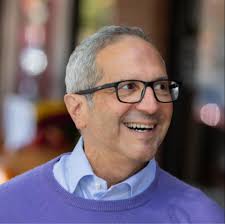
In the volatile and often unforgiving arena of modern American politics, reputations can be constructed with meticulous care yet dismantled with astonishing speed. Such was the fate of Peter Chatzky, a wealthy New York Democrat whose congressional aspirations came to an abrupt and ignominious halt this week amid a cascade of revelations concerning his past online conduct.
As reported on Thursday by The New York Post, the controversy surrounding Chatzky’s resurfaced social media activity triggered a political firestorm that ultimately proved insurmountable, forcing the candidate to suspend his campaign mere hours before a pivotal primary debate.
Chatzky, a software executive and former deputy mayor of Briarcliff Manor, had entered the Democratic primary for New York’s 17th Congressional District with considerable financial resources and a profile that suggested serious viability. The race, already crowded with contenders seeking to challenge Republican incumbent Representative Mike Lawler, appeared poised to intensify as candidates jockeyed for position in the weeks leading up to the vote.
However, as The New York Post chronicled, Chatzky’s campaign began to unravel when a series of past social media posts resurfaced, revealing a pattern of remarks that many observers deemed deeply inappropriate, offensive, and politically indefensible. These disclosures quickly eclipsed his policy proposals and campaign messaging, shifting the narrative from one of ambition to one of controversy.
At the center of the scandal were several posts dating back years, including a particularly troubling exchange from August 2020. In that instance, Chatzky described receiving an alleged blackmail threat involving a purported video of him accessing explicit material. Rather than addressing the matter with discretion, his public commentary on the episode included flippant and ambiguous remarks that drew sharp criticism.
When questioned by an acquaintance about the nature of the content, Chatzky responded in a manner that many interpreted as evasive and inappropriate, further fueling concern. Additional posts from earlier years compounded the controversy, including a 2016 exchange involving a reference to a seventeen-year-old individual, which critics seized upon as especially troubling.
As The New York Post reported, these revelations prompted widespread condemnation from political opponents, advocacy groups, and members of the public alike. The cumulative effect of the disclosures was to create a perception of conduct fundamentally at odds with the standards expected of a candidate for public office.
Beyond the specific posts that initially sparked outrage, further examination of Chatzky’s online activity revealed a broader pattern of behavior that intensified the scrutiny. According to materials cited by The New York Post, his social media profiles included interactions with and follows of various adult content creators and explicit online personalities.
While such activity may fall within the realm of personal conduct, its public visibility—and its juxtaposition with his political ambitions—proved damaging in the context of a competitive primary. In an era where digital footprints are subject to relentless examination, the boundary between private and public behavior has become increasingly porous, with significant implications for political figures.
The controversy was further exacerbated by allegations that some of Chatzky’s remarks extended into inappropriate humor and commentary, including statements that critics described as crude and unbecoming. These elements, taken together, created a narrative that opponents and detractors were quick to amplify.
Faced with mounting pressure and the prospect of confronting these issues in a public debate, Chatzky announced the suspension of his campaign. In a statement reported by The New York Post, he framed his decision in ostensibly altruistic terms, suggesting that his continued candidacy would divert resources and attention from the broader objective of defeating the Republican incumbent.
“Were I to continue my campaign,” he stated, “the party establishment and my competitors would need to spend significant effort and money to defeat me, resources that would be better spent elsewhere.” Notably absent from his statement was any direct acknowledgment of the controversy that had engulfed his candidacy.
This omission drew criticism from observers who argued that the explanation failed to address the substantive concerns raised by his past conduct. For many, the characterization of the withdrawal as an act of selflessness appeared incongruous with the circumstances leading up to the decision.
The response from Chatzky’s political rivals and advocacy organizations was swift and unequivocal. As detailed by The New York Post, one of his opponents, Tarrytown Trustee Effie Phillips-Staley, joined women’s rights groups in calling for his withdrawal even before his official announcement.
These voices emphasized the importance of accountability and the need for candidates to adhere to standards of conduct that reflect the responsibilities of public office. The controversy also reignited broader discussions about the vetting of candidates and the role of social media in shaping public perceptions.
Supporters of Chatzky were notably less vocal, and there was little evidence of a coordinated effort to defend his record or contextualize the remarks. This relative silence further underscored the extent to which the controversy had eroded his political standing.
The rapid collapse of Chatzky’s campaign offers a stark illustration of the evolving dynamics of political accountability in the digital age. As The New York Post report observed, the accessibility of historical online content has fundamentally altered the calculus of political risk, enabling past behavior to resurface with immediate and often devastating consequences.
This phenomenon raises important questions about the balance between personal privacy and public accountability. While candidates are entitled to private lives, the permanence and visibility of digital records mean that past actions—particularly those shared publicly—are subject to ongoing scrutiny.
Moreover, the case highlights the importance of judgment and discretion in the use of social media, particularly for individuals seeking positions of public trust. The informal and often irreverent tone that characterizes online interactions can clash sharply with the expectations of professionalism and decorum associated with political office.
For aspiring politicians, the lessons of this episode are both clear and cautionary. The digital record, once created, cannot easily be erased, and its implications may extend far beyond the context in which it was originally produced. As demonstrated by Chatzky’s experience, even remarks made years earlier can resurface to shape the trajectory of a campaign.
The incident also underscores the importance of transparency and accountability in addressing controversies. Attempts to deflect or minimize concerns may prove counterproductive, particularly in an environment where public trust is both fragile and essential.
The abrupt end of Peter Chatzky’s congressional campaign serves as a vivid reminder of the precarious nature of political ambition. In a landscape defined by intense scrutiny and rapid information dissemination, the margin for error is exceedingly narrow.
As chronicled by The New York Post, the convergence of past behavior, public perception, and political competition can swiftly transform a promising candidacy into a cautionary tale. For voters, the episode reinforces the importance of vigilance and discernment. For candidates, it underscores the enduring truth that character and judgment remain as critical as policy and platform.
In the final analysis, the story of Chatzky’s campaign is not merely one of individual failure but a reflection of the broader challenges inherent in navigating the intersection of personal conduct and public responsibility in the modern era.